Across September 2026, Asia’s largest pensions and sovereign investors continued to expand private-market exposure, while many family offices remained active but increasingly discriminating about new fund commitments. The month crystallised a clear allocation split that has been building all year.
Southeast Asian institutional allocators are accelerating capital deployments into regional private credit structures, driven by evolving central bank regulatory guidelines and demand for floating-rate yield buffers.
Through the ASEAN Capital Markets Forum Action Plan 2026–2030 and a recent London investment roadshow, regional regulators are positioning Southeast Asia’s markets as a more coherent and investable destination for global institutional capital.
Vietnam’s stock-market status upgrade is opening the door to a larger fund-management industry. The State Securities Commission and local industry voices are stressing the other side of that door: stronger products, governance, risk management and a deeper institutional investor base. Assets have grown fast. Structure has not fully caught up.
The Bank of Japan’s Summary of Opinions from the September meeting, released around 1 October, shows board members debating a faster path of normalisation after the policy rate reached 1.25 per cent, the highest since 1995. For Japanese asset owners the practical question is no longer whether domestic bonds exist as an option. It is whether rising JGB yields and a more active BoJ make home-market fixed income competitive enough to matter inside existing allocation bands.
From Tokyo’s policy calendar to private-market under-allocation and another round of private-bank hiring, the week ending 2 October left a clear message for CIOs and heads of allocation. Japan is again a rates-and-governance story, Asia private markets remain structurally under-owned relative to GDP weight, and franchise building in private wealth has not paused.
Sun Life Asia’s latest legacy study finds that among those worried their wealth will not survive the next generation, beneficiary readiness is the top concern at 52 per cent, ahead of market volatility at 49 per cent and family conflict at 44 per cent. Seventy per cent worry wealth will not last beyond the next generation, even as documented legacy plans have more than doubled year on year.
Global asset-owner surveys still show net positive intentions for private credit, but the intensity has cooled from last year’s peak as valuations and selectivity move up the agenda. In Asia, institutional capital continues to build dedicated Asia private-credit capacity even while global programmes become more disciplined. The investment question is underwriting quality, not whether the asset class remains open.
IFM Investors, the Australia-based manager of global pension capital, has opened a Singapore office to originate and execute diversified credit across South and Southeast Asia. Near-term deployment into the region is targeted in the US$250–300 million range, with a longer-term aim to rebalance a larger private-credit book toward Asia. Part of the firepower is backed by an Australian government commitment into IFM’s Asia-Pacific debt capabilities.
UOB has earmarked about S$800 million over five years to grow its private bank, including people and technology. Chew Mun Yew, head of the private bank, said the plan includes adding about 50 relationship managers a year and developing Hong Kong capability, with offshore clients from Hong Kong, Japan and Korea in scope. The analytical point is franchise build versus waiting for consolidated books.
For liability-driven insurance general accounts, elevated government-bond yields still support an income lock-in case, while tight credit spreads argue for selectivity rather than blanket carry. Thematic equity, including Asia supply-chain and technology exposure, remains a sized sleeve, not a substitute for the cash-flow core.
On 15 September the Indonesian Finance Ministry takes the Jakarta–Bandung rail stake off Danantara. On 8 September CIC opened a China–ASEAN council. The PE vehicle on that corridor is still the April platform.
UBS GWM’s mid-2026 Asia note put Asia investment-grade all-in yields near 5.3 per cent and a 93 basis-point pick-up over same-tenor US Treasuries, against 64 basis points for US IG. Asia high-yield dollar paper has returned 4.3 per cent year to date against 1.8 per cent for US peers, Bloomberg data compiled by The Business Times show. The allocation question is carry and selection, not a spread-tightening thesis.
AIIB is designing a platform for insurers and pensions to co-invest in infrastructure debt across its membership on common terms. The institutional implication is a shift from single-project origination to a repeatable sleeve.
Nippon Life and Japan Post Insurance still run enormous yen bond books against multi-decade policy liabilities. Public filings show the duration gap is real and the private-credit rotation is underway. They do not show a concealed solvency crisis or an unprecedented blow-out in mismatch.
The increasing institutional use of synthetic revenue wrappers across alternative portfolios is creating an industry-wide blind spot. Intermediaries who confuse options capitalization with genuine asset growth are severely mispricing underlying default risks.
The increasing institutional use of structured index factor overlays across public equity portfolios points to a defensive re-engineering pass. Intermediaries who confuse simple active stock picking with systematic risk insulation are mispricing downside tracking errors.
The increasing reliance on highly structured corporate margin lines and private asset pledges is creating a non-bank financing sandbox. Intermediaries who confuse raw liquidity extraction with corporate outperformance are mispricing default curves.
The widespread institutional deployment of cross-fund liquidity clawbacks to protect mature asset tranches is creating an industry-wide blind spot. Intermediaries who mistake paper valuations for true portfolio liquidity are severely mispricing duration risks.
The regulatory authority's aggressive compliance warning targets undocumented digital yield programs. Financial fiduciaries who confuse high headline yields with absolute capital safety are mispricing severe cross-border liquidation traps.
Mid-year earnings disclosures from top-tier asset managers reveal a stark operational divide. As wealth intermediaries demand cheaper passive tranches and private debt access, legacy fee structures are facing an unprecedented squeeze.
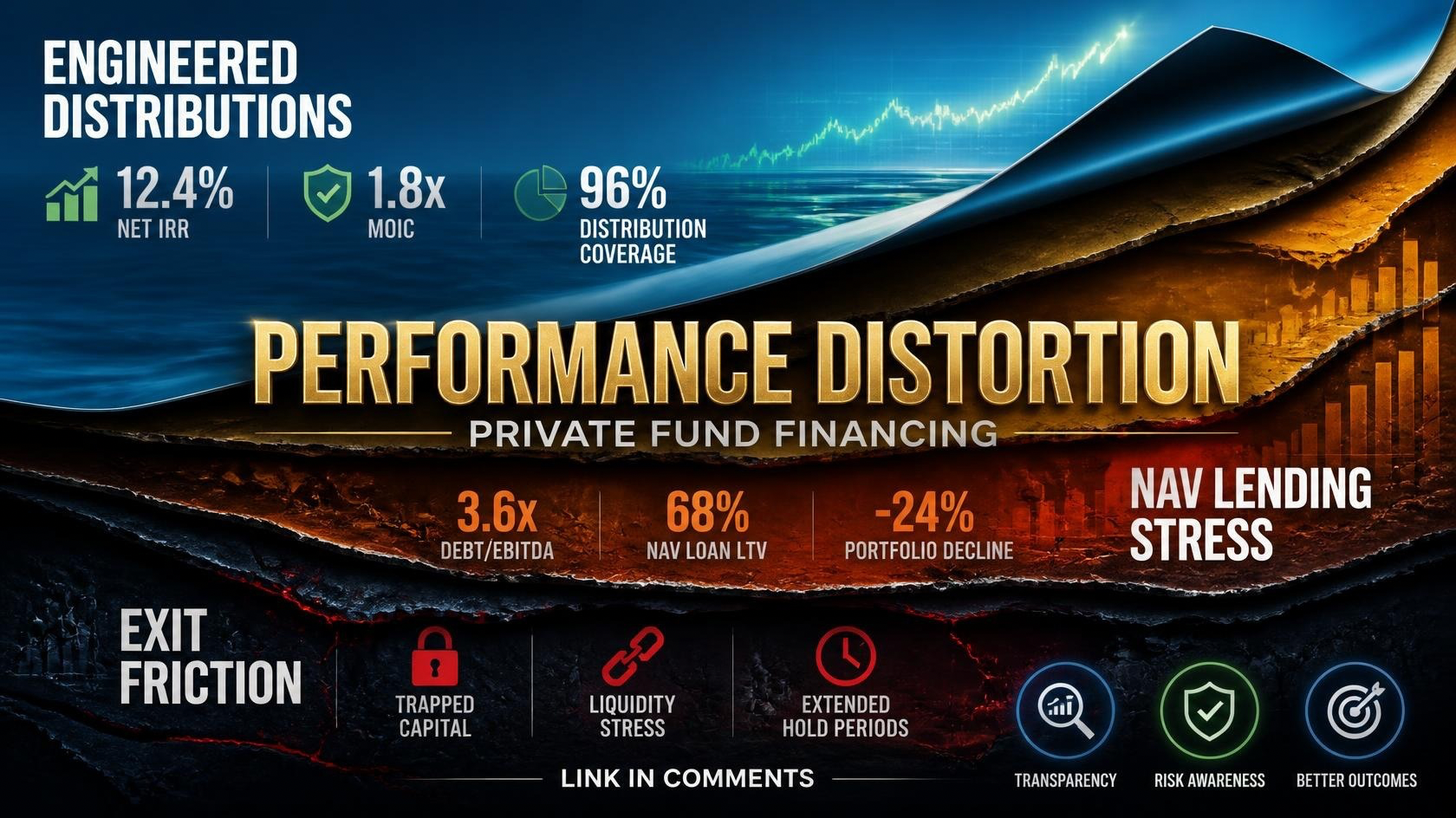
The widespread institutional reliance on fund-level structural leverage to force liquid pay-outs is creating an alternative asset blind spot. Intermediaries who confuse back-end engineering with genuine portfolio alpha are severely mispricing concentration risk.
The widespread institutional reliance on short-term credit facilities to artificially juice private fund returns is creating a systemic blind spot. Family offices who mistake engineering for asset alpha are mispricing severe liquidity and duration risks.
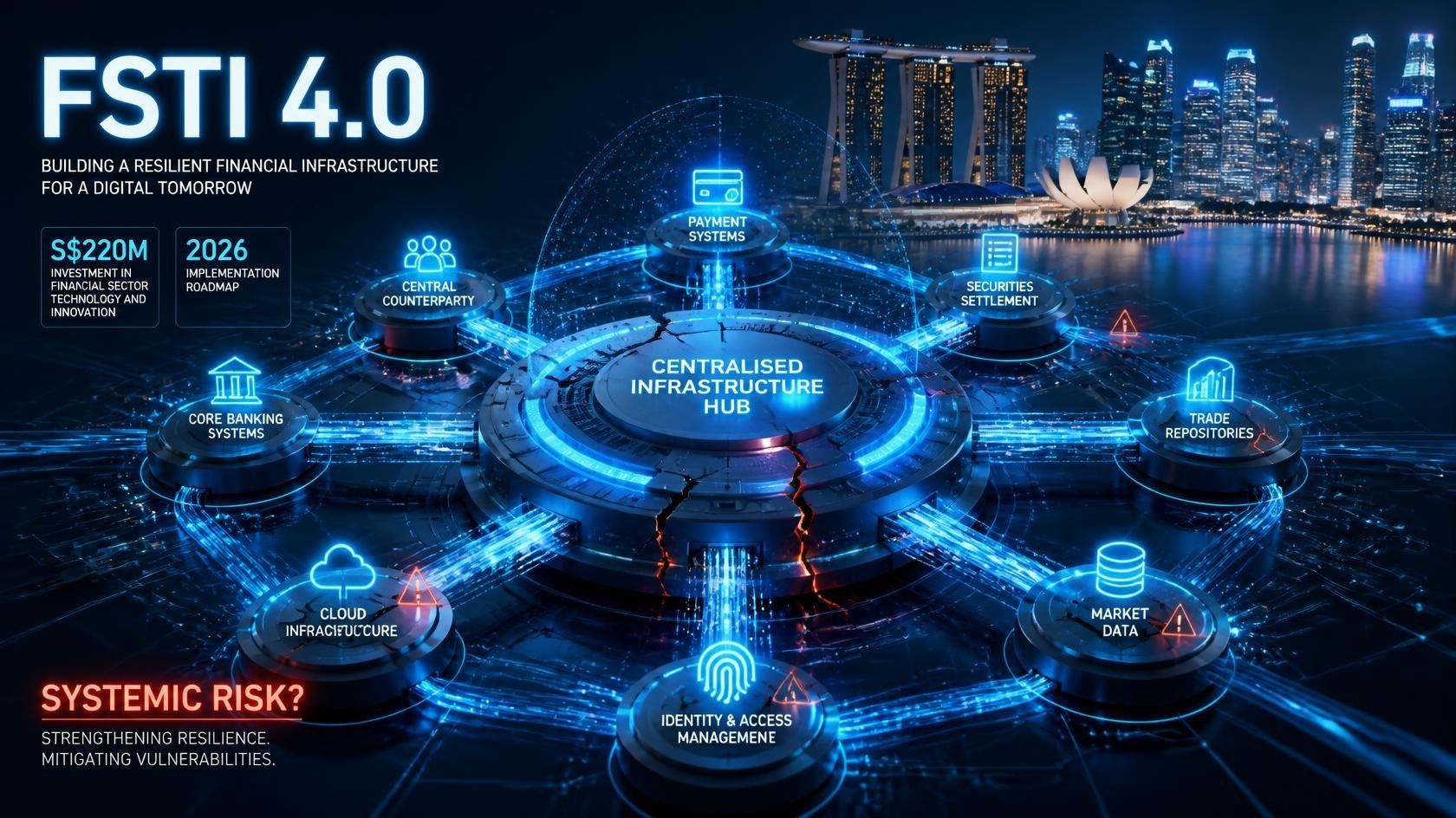
The central bank's massive capital injection into automated ecosystem tools is creating a dangerous illusion of operational safety. Financial fiduciaries who confuse interface speed with actual secondary liquidity depth are mispricing severe counterparty risks.
The unbridled rush into APAC private lending is hitting a wall of capacity saturation. As global asset managers resort to aggressive pricing concessions and weak corporate covenants to win middle-market mandates, long-duration allocators are mispricing systemic correlation risks.
As global central banks shift toward rigid data dependence, static strategic asset allocation maps are failing. Institutional retirement reserves are increasingly exposed to a dangerous structural imbalance between visible valuation marks and actual market depth.
Our proprietary policy alignment review synthesises a highly synchronized wave of monetary interventions and persistent inflation metrics to provide global asset managers with explicit cross-border duration risk markers.
As MSCI deploys structural 65/35 anchored frameworks to exploit relaxed Stock Connect criteria, global investment managers must transition from plain vanilla wrappers to highly bespoke regional architectures.
As Franklin Templeton partners with HashKey Exchange to distribute tokenised treasury fund wrappers across Asia, investment managers misprice the structural friction of on-chain secondary liquidity platforms.
Global asset management frameworks challenge the legacy balanced portfolio model, urging institutional allocators to aggressively target shorter durations and floating-rate credit to survive central bank data dependence.
An unprecedented structural alliance between top-tier tech architecture and the world's largest credit managers is redefining alternative asset classes. The sudden capital mobilisation reveals an intense infrastructure allocation gap across institutional portfolios.
The systemic reliance on historical correlation datasets creates severe capital exposure for global portfolios. Traditional diversification formulas fracture completely during macro shocks, demanding a shift to multi-dimensional analytics.
Global asset managers operating across the Asia-Pacific territory must abandon legacy index-tied bond models to deliver resilient absolute alpha. Untethering asset management platforms from standard public benchmarks emerges as the primary fiduciary mandate required to insulate institutional portfolios from accelerating macroeconomic cross-currents and sovereign credit volatility.
The escalating institutional reliance on alternative interest payment modifications threatens the core transparency of the private debt ecosystem, creating hidden pockets of asset risk within multi-billion-dollar allocation portfolios.
The sudden enforcement of a legacy 20% tax on offshore insurance investment income by mainland Chinese tax authorities marks a major shift in cross-border capital tracking. The policy audit tests the structural limits and long-term AUM margins of Hong Kong's private banking networks.
Global asset managers operating across Asia-Pacific must abandon traditional benchmark-bound fixed income models to deliver resilient, non-correlated yield structures for regional institutional portfolios.
Boutique and large-scale investment houses must secure seasoned private banking talent to navigate the complex multi-asset demands of Asian wealth networks.
Boutique investment houses across Asia must move past traditional relationship-driven asset distribution and build scalable systematic infrastructure to capture institutional mandate flows.
The asset management industry must abandon ad-hoc boutique sustainability structures and embrace harmonised concessional capital models to bridge the regional climate gap.
The systematic removal of over six hundred small-cap companies from the benchmark Tokyo Stock Price Index acts as an unprecedented regulatory catalyst, forcing regional asset managers to abandon passive index tracking and deploy aggressive corporate governance strategies to unlock trapped equity value.
The siloed asset-allocation model that dominated Asian boardrooms for a decade has been rendered obsolete by factor crowding. Chief Investment Officers, asset allocation teams, and private wealth fund selectors must transition to dynamic risk-factor pricing or face persistent tracking error shocks.
As crowded semiconductor trades unravel and private credit redemptions hit their structural boundaries, asset managers must look beyond traditional diversification metrics to survive a shifting regional macro landscape.
As financial engineering yields ground to operational value creation, the competitive edge in private equity has shifted from relationship-led networks to structural data integration across opaque corporate registries.
Elevated baseline yields have transformed fixed income into a core income engine, forcing asset owners to replace broad beta exposure with measured duration and highly selective credit underwriting.
As single-stock volatility surges rapidly underneath artificially calm index surfaces, prominent macroeconomic research directs multi-asset allocators to rotate liquidity out of crowded equity trades to secure downside protection. By shifting focus away from over-concentrated, tech-heavy public benchmarks, modern portfolios are prioritizing tangible structural sectors to navigate intensifying valuation dispersion.
The rapid expansion of semi-liquid, perpetual private market vehicles- frequently marketed as "evergreen" funds- has fundamentally transformed retail and intermediary capital gathering over the past decade. By packaging traditionally locked-up assets like middle-market private credit, infrastructure debt, and unlisted real estate into structures offering monthly or quarterly redemption windows, asset managers unlocked access to the massive global wealth channel. However, this architecture relies on a critical operational assumption: that continuous subscription inflows will always outpace redemption requests. As macroeconomic volatility tightens capital allocations across family offices and wealth platforms, this structural model is facing a severe systemic stress test, exposing deep friction points within asset mapping.
As structural megatrends drive persistent global inflation vectors, a comprehensive midyear outlook outlines why corporate treasuries and family offices must allocate up to 20% to alternative infrastructure
As global technology rebalancing accelerates, second-quarter corporate financial disclosures reveal that alternative asset platforms are generating record fee-related revenues by backing digital connectivity tranches
As digital asset indices cross critical macro boundaries, a comprehensive 12-month performance review outlines how multi-family offices, corporate treasuries, and sovereign wealth conduits systematically institutionalised crypto volatility into a structured alpha tranche.
The Indonesian central bank keeps its benchmark BI-Rate policy firm, prioritizing cross-border currency stability and commercial net interest margins over aggressive monetary easing loops.
Under Chief Executive Eddie Yue, the Hong Kong Monetary Authority hardens its Exchange Fund asset base, utilizing specialized interbank layers to insulate local registries from global fixed-income volatility.
The APAC Private Credit Index yield spread widens by +12.0 basis points, presenting institutional asset allocators with uncorrelated, premium yield opportunities as regional banks tighten lending criteria under macro pressures.
Amid an aggressive investor migration into mega-cap technology and artificial intelligence layers, the specialized Swiss wealth manager executes sweeping operational adjustments to protect operating income and prepare for a defensive growth rebound.
The People’s Bank of China holds its benchmark Loan Prime Rates unchanged at the July 20 fixation, prioritizing cross-border currency stabilization and commercial net interest margins over aggressive liquidity injections.
The BlackRock Investment Institute releases its comprehensive 2026 Midyear Strategic Playbook, urging institutional allocators to bypass broad public benchmarks and target granular bottlenecks within regional energy, credit, and industrial supply lines.
Ahead of its highly anticipated financial disclosure on July 21, the global risk analytics giant stands poised to capitalize on intense private credit data demands and total-portfolio risk mapping across APAC.
As monetary policy divergent paths trigger structural volatility across Asian commercial property, private market specialists argue that legacy net asset value valuations hide real portfolio stress.
Following strategic private-market SEC filings for its global income franchise, the alternative asset pioneer builds momentum across Asia's wirehouse corridors to capture high-net-worth liquidity fleeing compressed real estate spreads.
Federated Hermes continues to expand its Asia Pacific presence, capitalising on demand for active, responsible investment strategies amid evolving institutional and wealth management needs across the region.
Global custody banks and top-tier asset managers are rapidly scaling on-chain money market and ETF infrastructure, driven by institutional demand and structural efficiency gains.
A potent intersection of severe climate shifts and major shipping gate disruptions risks driving global food indices into double-digits, complicating central bank calculations into 2027.
Despite a conceptual US-Iran memorandum to reopen the Strait of Hormuz, persistent supply shortages, elevated US inflation prints, and deep domestic deflation in China continue to challenge global asset allocations.
While the US-Iran interim agreement provides vital breathing room for battered regional currencies, persistent shipping bottlenecks, sticky oil costs, and a looming El Niño supply shock demand a measured investment approach.
The announced US-Iran diplomatic framework sparks an immediate surge in cyclical assets and drops energy prices, paving the way for potential central bank easing and a robust export boom across North Asia.
Schroders downgrades 2026 global growth while boosting inflation forecasts, forcing a strategic asset allocation shift toward resource-heavy equities, structural AI tech, and alternative safe havens like gold.
With equities at record highs and credit spreads near post-GFC tights, comparisons to the late-1990s tech boom are everywhere. Schroders' fixed income team argues the cycle is earlier than it looks — but the margin for error in credit is shrinking, and where investors earn their carry matters more than ever.