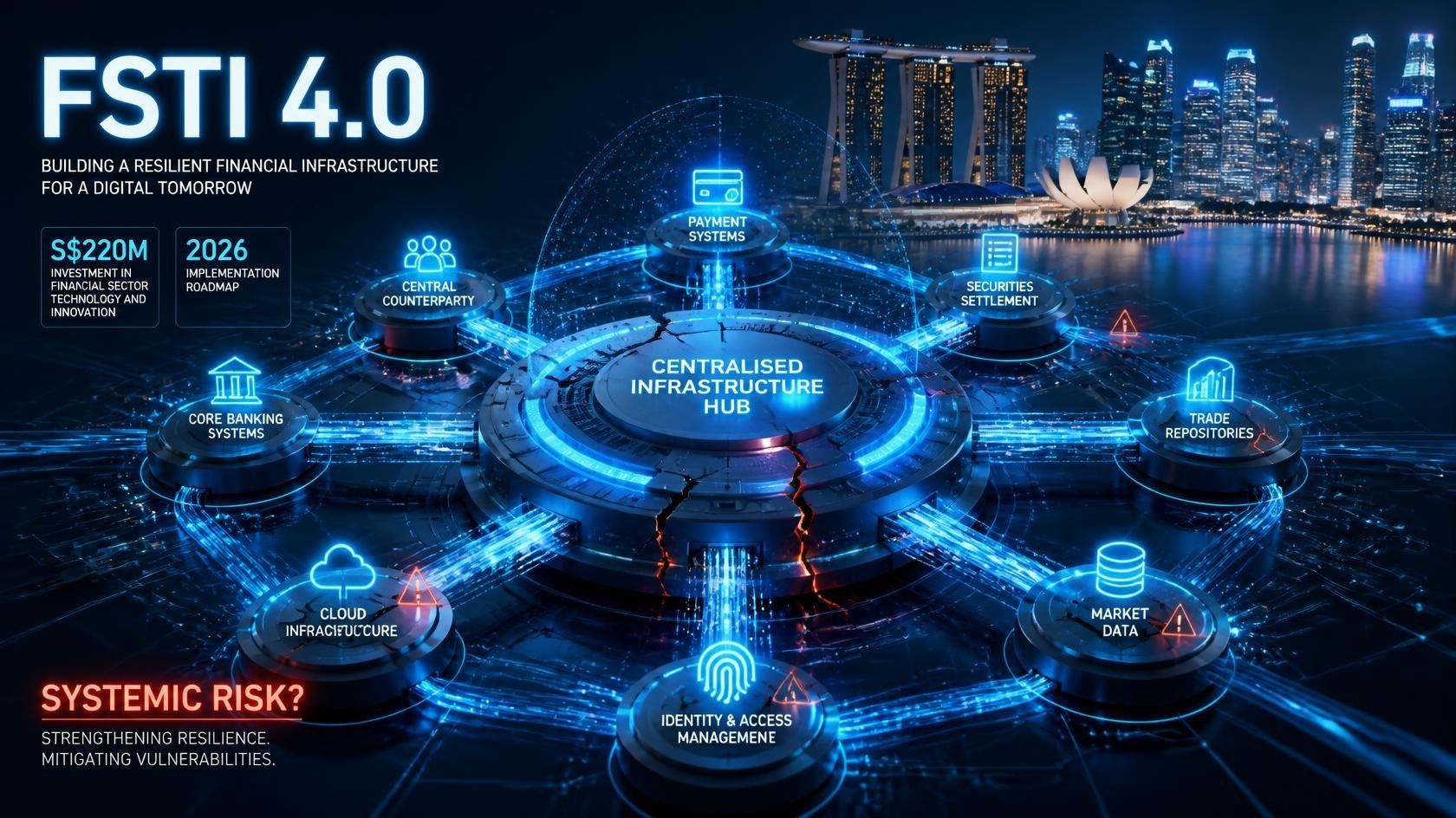
The operational plumbing governing institutional capital distribution across primary Southeast Asian financial nodes has entered a period of intense, technology-driven consolidation as the divergence between automated system capabilities and underlying asset liquidity reaches a historical peak. This rapid development is brought to the absolute forefront by the official policy updates released from the Monetary Authority of Singapore today, Tuesday, 1 September 2026, announcing a massive S$220 million commitment over the next three years to expand the Financial Sector Technology and Innovation Scheme (FSTI 4.0). While broader market sentiment views this open-architecture subsidization as a historic victory for cross-border operational transparency and fintech efficiency, a sophisticated macro perspective reveals that investors are mispricing the systemic liabilities embedded within centralized software infrastructures. By treating interface speed and digital convenience as permanent substitutes for localized compliance expertise, modern investment managers are introducing severe settlement vulnerabilities into their core execution nodes.
The core flaw in this prevailing technology-ingestion consensus stems from the fundamental reality that transferring portfolio visibility onto a centralized digital ledger does not alter the underlying liquidity parameters of the underlying asset classes. In a highly synchronized macroeconomic landscape defined by sudden central bank data shifts, public index metrics and automated trading feeds frequently display an illusion of stability that completely disappears during periods of intense market stress. When sudden currency derivative shocks or global margin squeezes disrupt emerging debt tranches, reliance on a single software standard or an automated algorithmic network can create massive technical bottlenecks. If automated redemption platforms face a concurrent wave of sell orders from distressed family offices and sovereign wealth custodians, heavy concentration in unified ledger standards triggers severe settlement latency, exposing multi-billion-dollar portfolios to immediate capital friction.
This aggressive technology adoption is creating a sharp competitive divide across the primary Pan-Asian wealth corridors, forcing relationship managers to completely overhaul their core advisory capabilities. Elite global institutions possess the capital depth to deploy advanced, institutional-grade look-through reporting engines, enabling their clients to satisfy stringent sovereign disclosure requirements and substance mandates seamlessly. In stark contrast, smaller independent boutique wealth managers running fragmented legacy software networks are hitting rapid layout bottlenecks, finding themselves entirely incapable of providing the granular data density that modern regulatory bodies demand. Because large investors and incoming next-generation wealth inheritors increasingly prioritize absolute legal compliance and institutional transparency, wealth houses that cling to the opaque, transactional playbooks of the past face swift operational obsolescence.
Furthermore, this rapid institutional transition is heavily accelerated by significant regulatory overhauls expanding across the region's primary wealth hubs. The recent implementation of modernized tax exemption frameworks and look-through reporting rules has introduced stringent substance requirements for single-family offices and multi-tiered investment vehicles. These updated risk-based capital rules heavily penalize holding entities carrying undocumented or ambiguous internal valuations on unlisted corporate shares, while offering substantial tax carve-outs for highly structured, transparent alternative fixed-income assets and direct infrastructure placements. This legislative landscape permanently alters the economic calculations for sophisticated regional gatekeepers, driving them to clear out high-overhead legacy private equity containers to optimize their aggregate balance-sheet efficiency under newly codified cross-border frameworks.
An intense consolidation of private wealth capital away from traditional growth equity fund structures into specialized alternative credit platforms is realigning the region. Multi-family offices from across the Hong Kong and Singapore wealth corridors will continue to rotate out of stale tech fund pools to secure robust, inflation-protected infrastructure and private debt income moats. The asset managers and wealth platforms that thrive during this cyclical transition will be those that accept the new reality of absolute structural clarity and optimize their modular fund delivery engines to handle large-scale secondary liquidity distributions. By accepting the permanent obsolescence of static asset-class boundaries and traditional diversification models, global financial gatekeepers can successfully position their multi-billion-dollar holding containers to withstand systemic macro volatility, ensuring true long-term wealth preservation across a rapidly evolving macroeconomic landscape.