The asset management industry across the Asia-Pacific region has entered a structural consolidation phase that will prove fatal to boutique fund houses that rely on outdated operational models. For decades, smaller investment firms have survived by leveraging localized personal relationships to secure occasional mandates from regional family offices and private banks. However, the rapid institutionalization of wealth networks means that personal networks are no longer sufficient to guarantee corporate survival.
To avoid complete irrelevance, boutique managers must urgently industrialize their product delivery mechanics and build dedicated capital markets capabilities. The recent appointment of a head of capital markets at regional giant Eastspring Investments, tapping a former top-tier exchange-traded fund specialist, reveals the direction the market is moving. Large institutional houses are systematically building specialized trading infrastructure to streamline liquidity delivery and product wrapper integration.
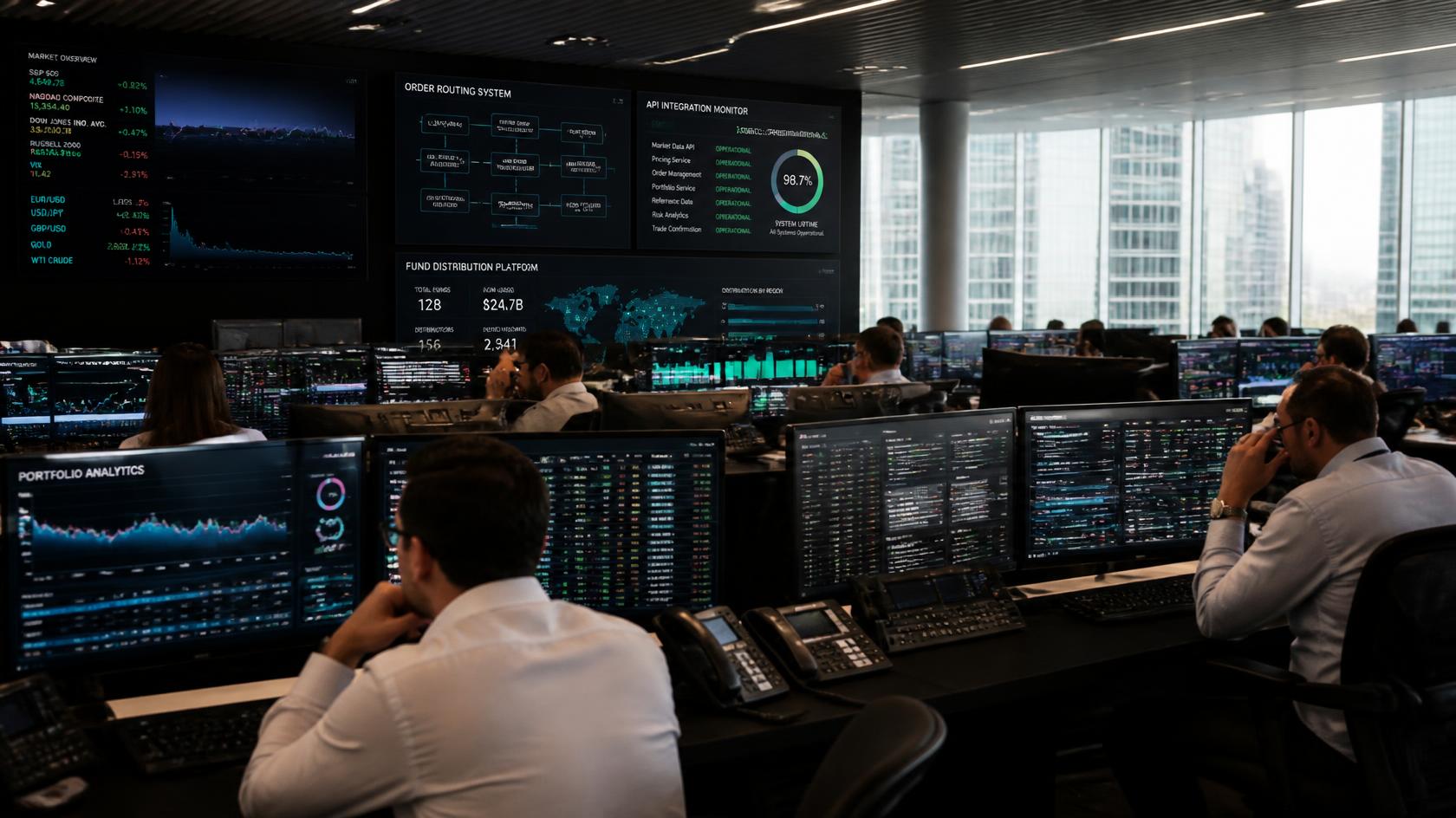
The structural significance of this change lies in the mechanical requirements of modern fund selectors and multi-family office gatekeepers. Sophisticated investors are no longer looking at performance metrics in isolation; they demand automated order routing, transparent real-time telemetry, and highly flexible fund vehicles like Variable Capital Companies. A boutique house that lacks the systematic infrastructure to interface seamlessly with these automated investor pipelines will be automatically excluded from requests for proposals.
Developing alternative fund managers frequently argue that their primary value proposition rests on generating specialized, non-correlated alpha that large index-tracking firms cannot replicate. This perspective fails to comprehend that unscaled alpha is operationally useless to an institution that needs to deploy hundreds of millions of dollars efficiently. If the operational friction of onboarding and tracking a boutique fund outweighs the expected alpha generation, institutional capital will simply pass.
The transition toward automated product delivery requires a fundamental realignment of internal budgetary priorities away from traditional sales teams toward operational engineering. Chief executive officers must invest heavily in building robust application programming interfaces and standardized risk reporting systems. This operational upgrade ensures that underlying fund structures can be easily integrated into the digital distribution platforms operated by global wealth managers.
Furthermore, the introduction of tokenized fund units and fractionalized private market wrappers is completely reshaping the cross-border distribution landscape. These financial technologies allow asset managers to bypass expensive traditional clearing houses and settle transactions instantly with global distributors. Boutique firms that fail to adopt these digital capital market conduits will find themselves structurally locked out of high-growth wealth channels.
The asset management community must also recognize that institutional gatekeepers are increasingly prioritizing structural cost efficiency alongside investment performance. Automated capital markets desks allow fund houses to optimize trade execution and significantly reduce transaction drag within underlying portfolios. These marginal savings compound over time, providing a clear competitive advantage in a market characterized by persistent fee compression.
Critics will suggest that over-automating distribution risks diluting the bespoke, high-touch client service that defines boutique asset management. This short-sighted view confuses high-touch service with operational backwardness. Automating transaction processing and compliance reporting frees up investment professionals to dedicate more time to delivering deep market insights to their clients.
The regional investment management industry stands at an operational crossroads where technological adequacy determines institutional viability. Continued reliance on relationship-driven placement will result in structural exclusion as major investors fully automate their procurement pipelines. Only those asset managers who commit to building industrialised, tech-driven capital markets architectures will command the future of Asia-Pacific wealth distribution.