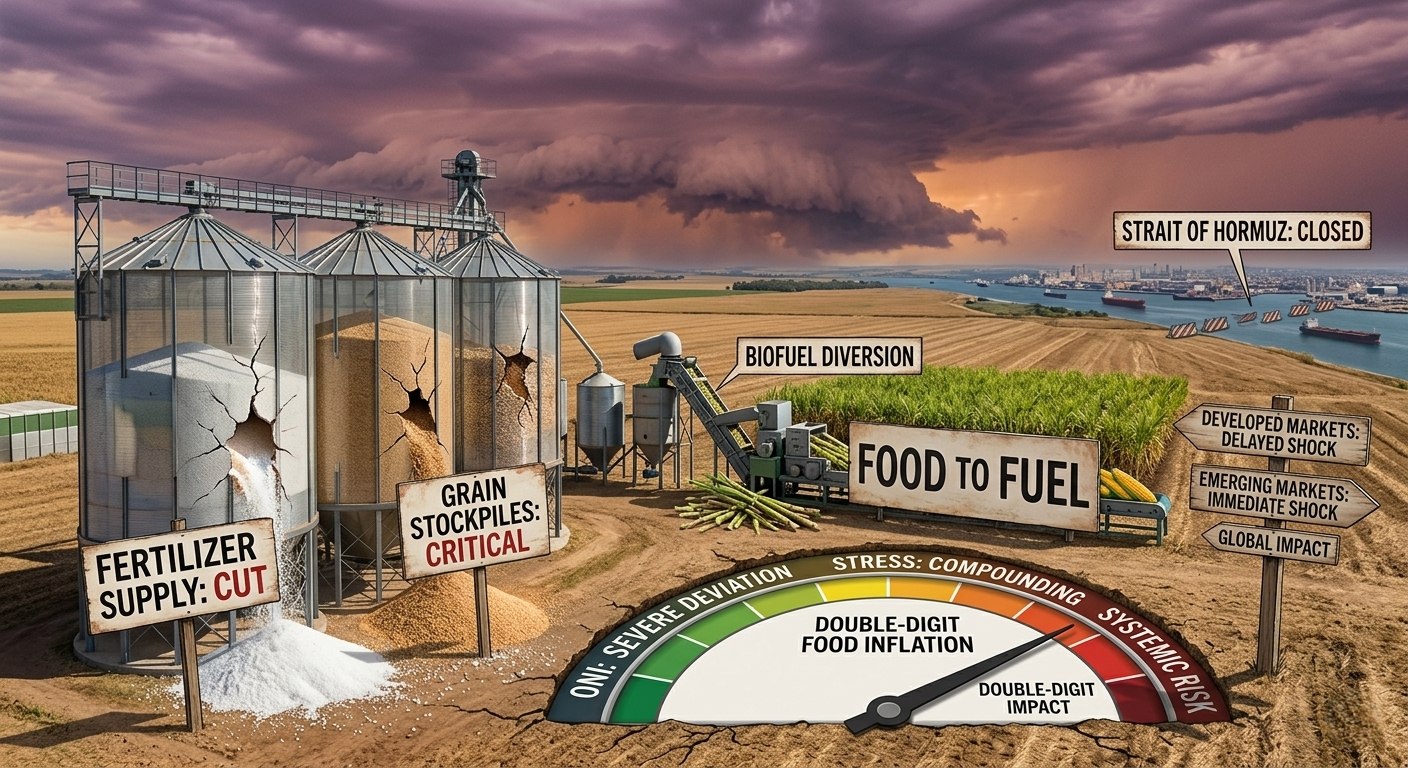
The global economy is facing a series of rolling, compounding inflationary pressures rather than an immediate, one-off supply shock. A potentially severe El Niño weather event is materialising in mid-2026, with meteorologists predicting a 90% probability of persistent activity through late autumn. While typical macro models treat climate cycles as localized disruption, the structural backdrop of 2026 transforms this particular weather shift into a systemic risk.
When past correlations are isolated and the noise from underlying energy markets is removed, a historically tight relationship emerges between the Oceanic Niño Index (ONI) and agricultural values. If historical trends hold, a severe temperature deviation in the Pacific Ocean implies an aggressive doubling of global food prices from their current baselines over the next year.
Compounding Risk Factors: Climate Squeezes and Input Shocks
The primary danger of the current El Niño loop stems from its arrival alongside existing bottlenecks that are already constraining global agricultural production. Global temperatures are breaking historical records, leaving more than half of the United States in deep drought conditions and pushing European and Indian growing belts well above 40°C.
Concurrently, a massive supply chain failure has severely dented global input availability:
- Fertiliser Starvation: While energy disruptions dominate headlines, the closure of the Strait of Hormuz has cut off a third of global urea supply. Urea spot prices have effectively doubled, starving fields that require intense nutrient application exactly as they enter their vital development phases.
- The Biofuel Diversion Loop: The broader Middle East oil shock has driven up demand for ethanol and biofuels. Consequently, massive volumes of critical food stockpiles - including sugar, corn, and soybean oils - are being structurally diverted into fuel production, further depleting domestic food networks.
Mapping Global Crop Exposure and Central Bank Triggers
The combination of nutrient deficits and erratic weather patterns will penalise specific agricultural groups unevenly. Wheat plantings across key exporters like Australia are dropping sharply, pointing to production deficits of several million tonnes for the 2026/27 harvest cycle. Sugar remains the most critically exposed commodity, with historic disruptions in India and Thailand threatening to push major exporters into net-import status.
For monetary policy, the pass-through of these agricultural realities into broader consumer price baskets will trigger sharp geographic divergence:
| Region Class | Typical Consumer Basket Weight | Macro Policy Vulnerability |
|---|---|---|
| Developed Markets (G7) | 10% - 15% | Delayed pass-through; adds over a percentage point to headline inflation by early 2027. |
| Emerging Markets (EM) | 25% + | Immediate real income shock; depresses consumer purchasing power and triggers swift capital outflows. |
Preventing Geopolitical and Wage Cascades
A prolonged wave of food inflation entering the macro backdrop just as energy-driven spikes begin to subside poses a severe structural threat. The primary concern for long-term investors is not a short-lived price increase, but the ingrained second-round effects on global wage negotiations. The longer food costs remain elevated, the faster inflation embedding occurs, pushing central banks to extend restrictive policies.
Furthermore, this financial strain creates a potent socioeconomic catalyst. The resulting pressure on real household incomes and prolonged consumption declines could exacerbate an ongoing populist shift across the globe, complicating the regulatory landscape for international investors ahead of major electoral cycles.