← Back to archive

Topic

InvestIQAsia

Every InvestIQ Asia story tagged InvestIQAsia. Subscribe below to get the latest intelligence by email.

KWAP: senior economy and early-stage capital in the same week

Asset Owners

5 Oct 2026

KWAP: senior economy and early-stage capital in the same week

Malaysia’s civil-service pension fund KWAP is looking at retirement-village and senior-economy investments, according to on-record remarks by the second finance minister. In parallel, KWAP has launched Dana Perintis, committing up to RM500 million to Malaysian-focused venture capital and direct early-stage companies. One fund, two sleeves: ageing real assets and domestic innovation capital.


Korea keeps the 70% risky-asset ceiling in play for retirement pensions

Asset Owners

5 Oct 2026

Korea keeps the 70% risky-asset ceiling in play for retirement pensions

South Korean authorities are leaning toward retaining the 70 per cent cap on risky assets in retirement pensions. Market volatility has slowed a reform push that had aimed to give savers more room. For managers, the near-term product and allocation story stays inside the existing framework.

Vietnam’s fund industry after the upgrade: growth meets a higher bar

Opinion

5 Oct 2026

Vietnam’s fund industry after the upgrade: growth meets a higher bar

Vietnam’s stock-market status upgrade is opening the door to a larger fund-management industry. The State Securities Commission and local industry voices are stressing the other side of that door: stronger products, governance, risk management and a deeper institutional investor base. Assets have grown fast. Structure has not fully caught up.

Hong Kong entrepreneurs are putting turnover into AI. Personal wealth is the second book.

Private Wealth

2 Oct 2026

Hong Kong entrepreneurs are putting turnover into AI. Personal wealth is the second book.

HSBC Private Bank’s Global Entrepreneurial Wealth Report 2026 finds about seven in ten Hong Kong entrepreneurs plan to invest 11 to 30 per cent of annual turnover in artificial intelligence over the next twelve months, above the global share. Most have already adjusted operations for AI. The private-bank question is how that corporate spend sits next to personal portfolio construction.

BoJ’s pace debate turns Japan’s domestic bond story from politics into relative value.

Opinion

2 Oct 2026

BoJ’s pace debate turns Japan’s domestic bond story from politics into relative value.

The Bank of Japan’s Summary of Opinions from the September meeting, released around 1 October, shows board members debating a faster path of normalisation after the policy rate reached 1.25 per cent, the highest since 1995. For Japanese asset owners the practical question is no longer whether domestic bonds exist as an option. It is whether rising JGB yields and a more active BoJ make home-market fixed income competitive enough to matter inside existing allocation bands.

This Week in Asia: Rates, bands and where capital is actually moving

Analysis

2 Oct 2026

This Week in Asia: Rates, bands and where capital is actually moving

From Tokyo’s policy calendar to private-market under-allocation and another round of private-bank hiring, the week ending 2 October left a clear message for CIOs and heads of allocation. Japan is again a rates-and-governance story, Asia private markets remain structurally under-owned relative to GDP weight, and franchise building in private wealth has not paused.

APAC HNW anxiety is high. Comprehensive asset allocation is still rare.

Private Wealth

2 Oct 2026

APAC HNW anxiety is high. Comprehensive asset allocation is still rare.

Lombard Odier’s regional work with more than 390 high-net-worth individuals across eight Asia-Pacific markets finds only about one in five guided by a comprehensive asset allocation strategy, even as more than half express deep concern about market conditions. Confidence in portfolio fitness remains high. Structure is the gap.

Asian institutions are building gold as a strategic sleeve, not a trade.

Asset Owners

2 Oct 2026

Asian institutions are building gold as a strategic sleeve, not a trade.

Across the region, sovereign, pension and insurance balance sheets are treating gold as portfolio infrastructure: Hong Kong is deepening market plumbing and MPF access paths, Korea has widened reserve implementation tools, and Japanese institutional investors are looking beyond domestic bonds and currency risk. The common theme is diversification under a wider set of macro outcomes.

Asia’s wealth worry is not only markets. It is whether heirs can run the book.

Opinion

1 Oct 2026

Asia’s wealth worry is not only markets. It is whether heirs can run the book.

Sun Life Asia’s latest legacy study finds that among those worried their wealth will not survive the next generation, beneficiary readiness is the top concern at 52 per cent, ahead of market volatility at 49 per cent and family conflict at 44 per cent. Seventy per cent worry wealth will not last beyond the next generation, even as documented legacy plans have more than doubled year on year.

Singapore households still lean on insurance and pensions. The securities shift is the test.

Asset Owners

1 Oct 2026

Singapore households still lean on insurance and pensions. The securities shift is the test.

Allianz Research data put insurance and pension assets at 47.2 per cent of Singaporean household financial portfolios, against a global average of about 24.8 per cent. Net financial assets per capita ranked fourth globally in 2025. The open question for insurers and asset managers is whether that savings model holds as households move more wealth into securities worldwide.

HSBC wants a top-tier India wealth seat by 2030. The map runs beyond the metros.

Private Wealth

30 Sep 2026

HSBC wants a top-tier India wealth seat by 2030. The map runs beyond the metros.

HSBC India chief executive Hitendra Dave has set a public ambition for the bank to rank among India’s top four or five private banks in wealth management by 2030. The plan rests on wealth, transaction banking and cross-border “globality,” with branch expansion into smaller cities where affluent pools are growing.

APAC family offices led global outperformance. AI is the named direct-investment priority.

Private Wealth

29 Sep 2026

APAC family offices led global outperformance. AI is the named direct-investment priority.

Citi Wealth’s 2026 Global Family Office Report finds Asia-Pacific family offices reporting the highest portfolio outperformance globally, with 26 per cent above 15 per cent year to date. The same cohort shows the most ambitious return targets and the strongest focus on artificial intelligence for new direct investment. Direct-investing participation in APAC is the highest of any region in the survey.

Singapore’s CPF is building a 2028 life-cycle path into diversified commercial products.

Asset Owners

29 Sep 2026

Singapore’s CPF is building a 2028 life-cycle path into diversified commercial products.

The CPF Board will introduce a new investment scheme in 2028 offering simplified, low-cost, diversified life-cycle products from commercial providers. Portfolios will rebalance automatically along a glide path from higher-risk assets toward lower-risk assets as members age, with phased liquidation by a target date. Industry engagement on product specifications is already under way.

Private credit is still wanted. The easy allocation phase is over.

Opinion

29 Sep 2026

Private credit is still wanted. The easy allocation phase is over.

Global asset-owner surveys still show net positive intentions for private credit, but the intensity has cooled from last year’s peak as valuations and selectivity move up the agenda. In Asia, institutional capital continues to build dedicated Asia private-credit capacity even while global programmes become more disciplined. The investment question is underwriting quality, not whether the asset class remains open.

IFM is putting pension capital into Asia private debt from Singapore.

Opinion

29 Sep 2026

IFM is putting pension capital into Asia private debt from Singapore.

IFM Investors, the Australia-based manager of global pension capital, has opened a Singapore office to originate and execute diversified credit across South and Southeast Asia. Near-term deployment into the region is targeted in the US$250–300 million range, with a longer-term aim to rebalance a larger private-credit book toward Asia. Part of the firepower is backed by an Australian government commitment into IFM’s Asia-Pacific debt capabilities.

Infrastructure is back at the top of the global asset-owner list. Cash is the swing factor.

Asset Owners

25 Sep 2026

Infrastructure is back at the top of the global asset-owner list. Cash is the swing factor.

The Marsh Global Asset Owner Barometer 2026, covering 430 owners with about US$5.8 trillion in assets, finds infrastructure the strongest net allocation intention for the coming year. Inflation-linked assets and emerging-market equities follow. Cash has flipped from net reduction plans to a clear net increase, restoring optionality after a year of tighter liquidity preferences.

Asia private bankers still expect double-digit net new money. Hong Kong and Singapore remain the growth hubs.

Private Wealth

25 Sep 2026

Asia private bankers still expect double-digit net new money. Hong Kong and Singapore remain the growth hubs.

A Bloomberg Intelligence survey of 100 senior private bankers in Hong Kong and Singapore finds more respondents expecting double-digit annual net new money growth over the next five years than in the prior survey. Mainland diversification demand and emerging wealth from Southeast Asia and the Middle East are the named drivers. Regulatory noise from the mainland is widely expected to have only a mild effect on flows.

UOB is buying private-bank capacity. North Asia offshore is the named hunting ground.

Opinion

23 Sep 2026

UOB is buying private-bank capacity. North Asia offshore is the named hunting ground.

UOB has earmarked about S$800 million over five years to grow its private bank, including people and technology. Chew Mun Yew, head of the private bank, said the plan includes adding about 50 relationship managers a year and developing Hong Kong capability, with offshore clients from Hong Kong, Japan and Korea in scope. The analytical point is franchise build versus waiting for consolidated books.

Hong Kong is leading Deutsche’s emerging-markets private bank. Mainland-linked demand is still in the room.

Private Wealth

23 Sep 2026

Hong Kong is leading Deutsche’s emerging-markets private bank. Mainland-linked demand is still in the room.

Marco Pagliara, head of emerging markets at Deutsche Bank Private Bank, said this week that Hong Kong has been the best-performing region in that franchise in 2026, with visible activity in high-end real estate that often carries a Chinese client link. South-east Asia is running close behind. The investment question is where UHNW liquidity and leverage are being put to work.

NPS is opening an India government-bond channel. The story is access, not a printed weight.

Asset Owners

23 Sep 2026

NPS is opening an India government-bond channel. The story is access, not a printed weight.

Korea’s National Pension Service is seeking a licence to invest in Indian government securities under SEBI’s lighter compliance route for low-risk foreign investors such as pensions and sovereign funds. Public reporting describes the application as advanced and among the first from a large global pension under that window. A dedicated G-sec channel would sit beside existing India equity exposure via offshore funds.

NZ Super’s year was strong. The allocation question is still geographic risk.

Asset Owners

22 Sep 2026

NZ Super’s year was strong. The allocation question is still geographic risk.

The New Zealand Superannuation Fund reported a 14.2 per cent return for the year to 30 June 2026. Public coverage of the result noted a substantial equity weight and an underweight to US equities during a period when global equity leadership was concentrated. For other asset owners, the lesson is reference-portfolio design, not a single year’s number.

Insurers still have a fixed-income job. Compressed spreads do not retire it.

Opinion

22 Sep 2026

Insurers still have a fixed-income job. Compressed spreads do not retire it.

For liability-driven insurance general accounts, elevated government-bond yields still support an income lock-in case, while tight credit spreads argue for selectivity rather than blanket carry. Thematic equity, including Asia supply-chain and technology exposure, remains a sized sleeve, not a substitute for the cash-flow core.

Barclays’ Asia wealth book is in play. The buyers are Singapore banks.

Private Wealth

22 Sep 2026

Barclays’ Asia wealth book is in play. The buyers are Singapore banks.

Public reporting in mid-September described a sale process for Barclays’ Hong Kong and Singapore private-wealth units, with Singapore banks named as the remaining contenders and no signed transaction disclosed. The investment story is consolidation of private-banking client books in the two cities, not a new product launch.

NPS changes CIO with the domestic book still heavy

Asset Owners

18 Sep 2026

NPS changes CIO with the domestic book still heavy

Lee Kyu-hong takes the National Pension Service’s chief fund officer seat on 14 September. Domestic equities were 29.1 per cent of financial assets at the end of June, above a target the committee had already raised to 20.8 per cent. The 2026 plan is unchanged.

ADIA Raises Private Equity and Hedge-Fund Ranges, Cuts the Real-Estate Band

Asset Owners

17 Sep 2026

ADIA Raises Private Equity and Hedge-Fund Ranges, Cuts the Real-Estate Band

The Abu Dhabi Investment Authority’s 2025 review lifts the private-equity policy range to 15–20 per cent and financial alternatives to 7–12 per cent. The real-estate range falls to 2–7 per cent. Absolute property exposure is described as unchanged. Twenty-year annualised return: 6.6 per cent.

Mainland Wealth Is Buying Overseas Multi-Asset Through the Licensed Door

Private Wealth

17 Sep 2026

Mainland Wealth Is Buying Overseas Multi-Asset Through the Licensed Door

Pictet’s Hong Kong-domiciled Strategic Income Fund has grown to $5.1 billion from $1.6 billion at the start of 2026. About 60 per cent of that book arrived from mainland China through the Mutual Recognition of Funds channel. The investment mix in the August note included US Treasuries, gold, and listed US technology.

Asia Credit Is a Carry Sleeve. Spreads Are Not the Whole Story.

Opinion

17 Sep 2026

Asia Credit Is a Carry Sleeve. Spreads Are Not the Whole Story.

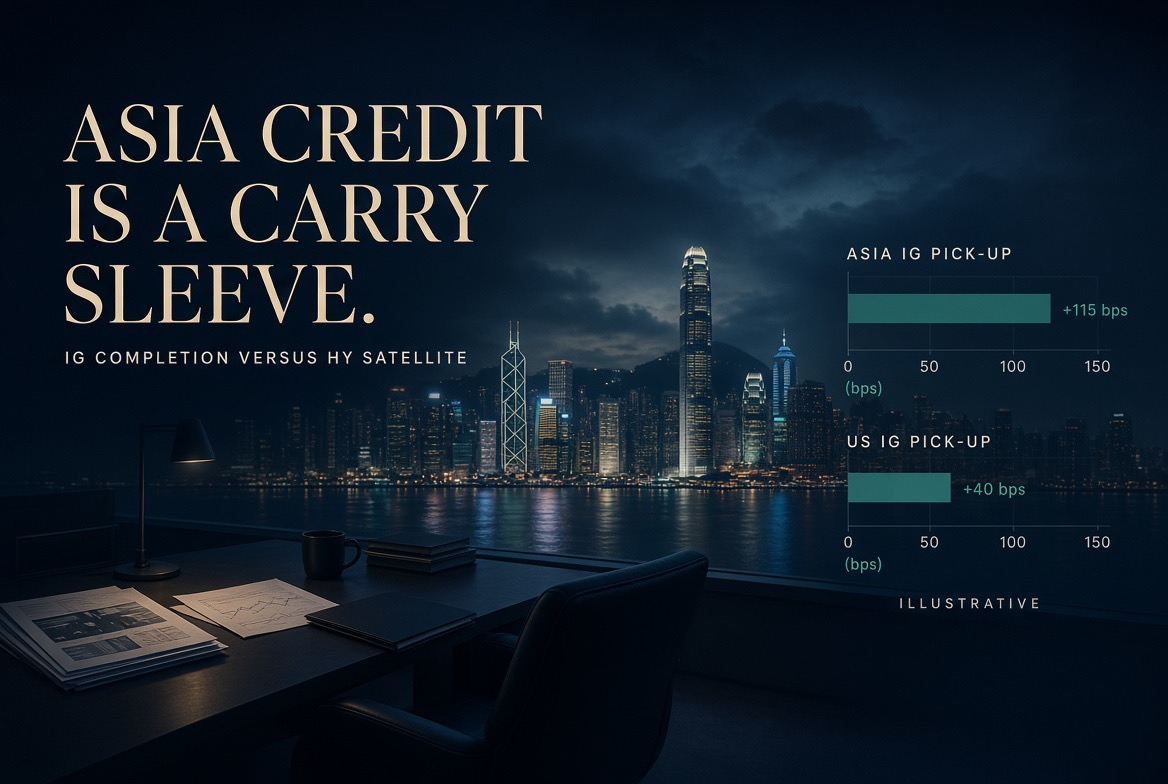
UBS GWM’s mid-2026 Asia note put Asia investment-grade all-in yields near 5.3 per cent and a 93 basis-point pick-up over same-tenor US Treasuries, against 64 basis points for US IG. Asia high-yield dollar paper has returned 4.3 per cent year to date against 1.8 per cent for US peers, Bloomberg data compiled by The Business Times show. The allocation question is carry and selection, not a spread-tightening thesis.

GPIF vs NPS: Two Giant Policy Mixes, Two Different Problems for Managers

Asset Owners

16 Sep 2026

GPIF vs NPS: Two Giant Policy Mixes, Two Different Problems for Managers

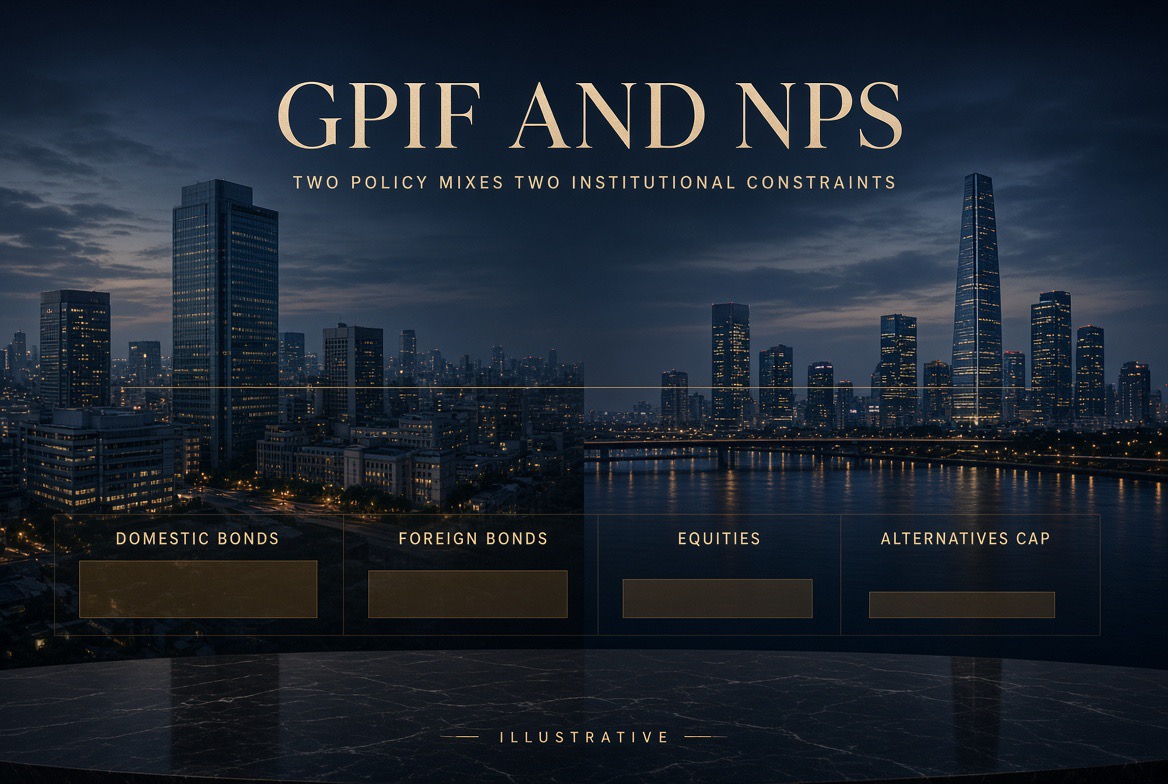
Japan’s Government Pension Investment Fund continues to operate a four-box listed policy mix, with alternatives limited to 5 per cent inside those boxes. Korea’s National Pension Service has written a 14 per cent alternatives allocation, including private debt, into its 2026 plan. The two funds sit in the same regional coverage universe. Their mandates do not.

Asia DPM Allocation After US Concentration

Private Wealth

16 Sep 2026

Asia DPM Allocation After US Concentration

Discretionary books in the region are being rebuilt around a reduction in US equity weight. Lombard Odier’s published 2026 Asia DPM stance overweight emerging-market equities, underweight US equities, holds fixed income neutral with an EM-bond tilt, uses convertibles for optionality and treats gold as a core holding. Digital assets are excluded.

The Endowment Liquidity Pivot: Institutional Allocators Leverage Secondary Sales to Rebalance Illiquid Alternative Frameworks

Asset Owners

4 Aug 2026

The Endowment Liquidity Pivot: Institutional Allocators Leverage Secondary Sales to Rebalance Illiquid Alternative Frameworks

As prolonged fund distribution cycles and private-market valuation friction slow the velocity of cash returns across global asset registries, major institutional allocators are executing targeted secondary market reallocations. By proactively divesting bundles of mature buyout and regional alternative fund interests, elite educational endowments and non-profit foundations are methodically restructuring their alternative portfolios to optimize near-term cash velocity and defend baseline capital-preservation targets.

The Spread Duration Trap: Institutional Asset Allocators Pivot Toward Defensive Infrastructure and Physical Real Assets

Opinion

4 Aug 2026

The Spread Duration Trap: Institutional Asset Allocators Pivot Toward Defensive Infrastructure and Physical Real Assets

As single-stock volatility surges rapidly underneath artificially calm index surfaces, prominent macroeconomic research directs multi-asset allocators to rotate liquidity out of crowded equity trades to secure downside protection. By shifting focus away from over-concentrated, tech-heavy public benchmarks, modern portfolios are prioritizing tangible structural sectors to navigate intensifying valuation dispersion.

Live Intelligence Network

Subscribe to InvestIQ Asia

Independent intelligence for CIOs, asset owners, private-bank investment leads, and institutional managers across Asia Pacific.

Managed by InvestIQ Asia Research. Primary-source analysis of capital deployment and portfolio decisions.