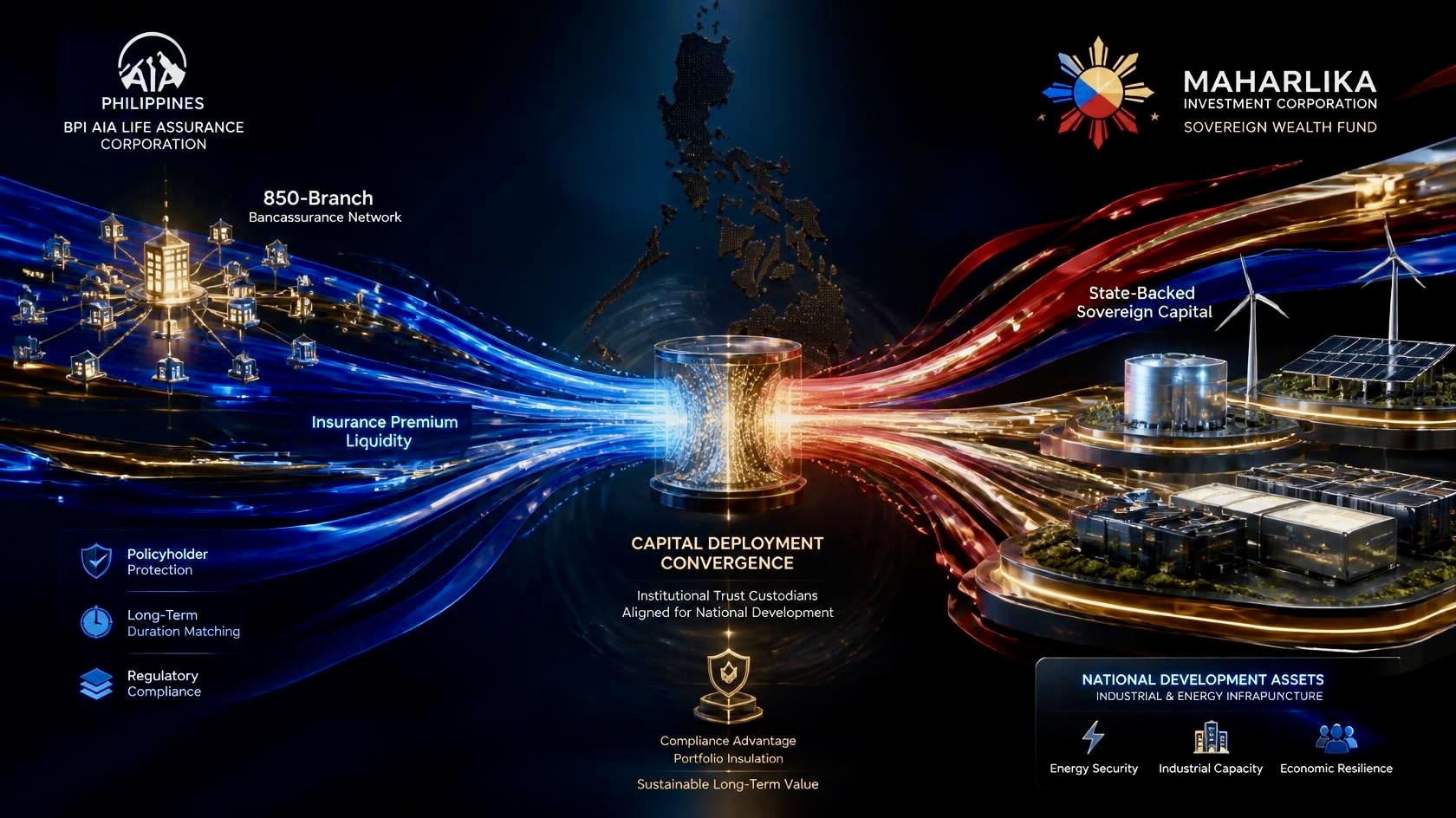
The corporate architecture governing institutional asset placement within the Philippine domestic market has entered an intensive capital alignment phase. Underpinning this regional momentum is the robust financial performance of AIA Group Limited, which has formally disclosed an operating profit after tax increase of 13 per cent per share for the first half of 2026, reaching US$ 4,163 million. This exceptional capital generation provides an unyielding balance-sheet foundation for its domestic investment division, AIA Philippines. The corporate mandate has become highly localized following the formal appointment of Melissa Henson as the new Chief Executive Officer of BPI AIA Life Assurance Corporation. Having previously served as Chief Marketing Officer since 2023, Henson’s executive transition triggers an immediate tactical review of how the combined entity deploys its substantial liquidity blocks across its domestic asset wrappers to maximize local yield performance.
Concurrently, the state-backed sovereign vehicle, Maharlika Investment Corporation, is accelerating its targeted capital deployment pipeline under a newly structured framework. The fund has finalized a major public-private strategic petroleum reserve partnership alongside the state-run Philippine National Oil Company. Under this operational framework, the sovereign wealth fund will act as the master capital provider, committing an estimated ₱5 billion per storage tank facility to construct a series of high-capacity industrial units in Bataan. According to the state agencies, each independent infrastructure tank is engineered to hold between 500,000 and one million barrels of oil. This initiative creates an isolated, macro-insulated physical asset class that is designed to anchor national supply chain resilience against geopolitical shocks. The long-term blueprint aims for up to 15 storage facilities, transforming the domestic energy grid into a primary institutional destination for long-duration capital.
The sudden convergence of these multi-billion-peso corporate cash positions with state-sponsored energy mandates presents institutional trust custodians with a unique duration-matching pipeline. By channeling long-term premium liquidity toward these sovereign-sponsored industrial and energy tranches, corporate investors can effectively insulate their portfolios from regional macroeconomic volatility. For AIA Philippines, the ability to anchor capital in government-supported infrastructure projects offers a crucial compliance advantage as risk-based frameworks evolve. The group's localized bancassurance network, which utilizes the vast 850-branch layout of the Bank of the Philippine Islands, provides a continuous capital generation engine. This configuration allows the newly structured executive desk at BPI AIA to absorb persistent domestic retirement inflows and instantly redeploy them into ring-fenced national development projects.
The immediate structural task confronting fixed-income gatekeepers within the group's regional ecosystem is shaped by a closing window to lock down long-term yield assets. Under corporate leadership guidelines, the platform must optimize its combined premium pools without falling foul of localized asset classification penalties that target speculative offshore currency structures. By utilizing participating whole-life insurance vehicles to guarantee steady capital generation, the firm can execute massive long-term allocations that match the extended construction horizons of the national tank farm initiative. This institutional realignment proves that the monetization of premium reserves within emerging Asian hubs is becoming tightly bound to high-density public-private partnerships. Elite gatekeepers are watching these deployment timelines closely, as the integration of sovereign wealth funds with corporate capital sets a powerful precedent across the wider Southeast Asian wealth management landscape.