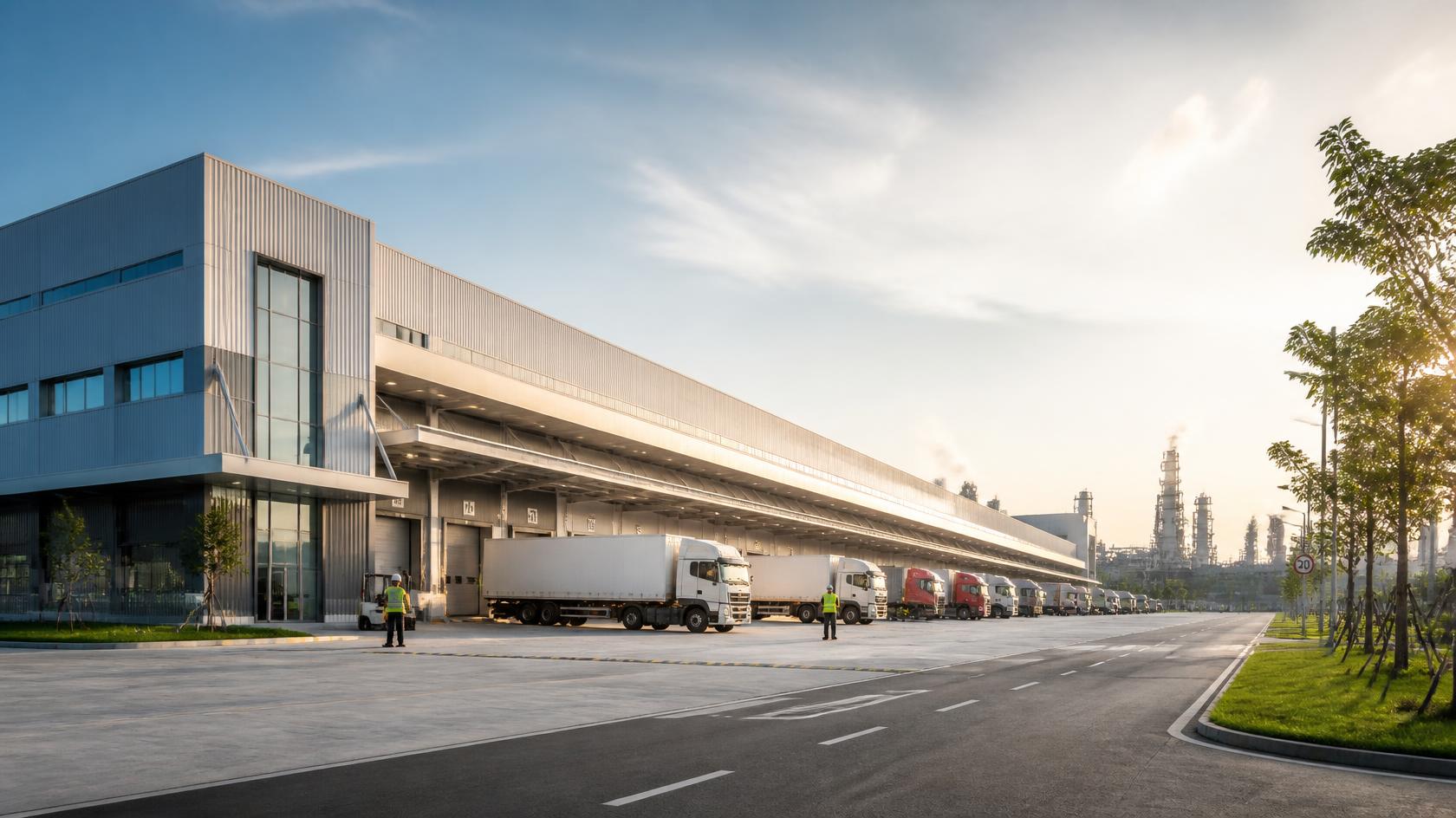
The Indonesia Investment Authority, known internationally as INA, has finalised an expansive joint funding framework to construct premier logistics installations across key manufacturing corridors. The sovereign wealth fund is formally broadening its existing industrial partnership with Asia-Pacific real asset manager ESR Group to deploy capital into two new primary logistics developments located in Cikarang, Greater Jakarta. This targeted deployment highlights a significant move by state wealth managers to divert capital from volatile public securities into local tangible assets that support domestic macro-economic expansions.
The corporate layout reveals that the incoming institutional facilities will cater directly to high-specification storage requirements driven by modern e-commerce models and expanding regional manufacturing hubs. Independent freight data projects that the country's broader domestic logistics market will surpass one hundred and eighty-eight billion dollars early next decade, providing an exceptionally strong macro tailwind for long-duration real estate investments. By anchoring these industrial nodes, the sovereign investor guarantees consistent, inflation-linked yield characteristics that match long-term domestic capital preservation objectives.
Sovereign wealth experts suggest that the structural expansion of this industrial pipeline reflects an underlying strategy to modernise the nation's core supply chain mechanisms. The integration of advanced technological parameters within these new logistics facilities ensures that local manufacturing networks can achieve higher productivity metrics. For INA, this deployment represents a critical milestone in its multi-tier infrastructure asset management roadmap, illustrating how state capital can successfully catalyse private sector investments in highly sensitive economic zones.
The decision to focus heavily on the Cikarang corridor is highly strategic, given its position as the industrial heartbeat of West Java. This region hosts the highest concentration of automotive, electronics, and consumer goods manufacturing plants in Southeast Asia. By providing institutional-grade warehousing, the joint venture directly resolves persistent operational bottlenecks associated with fragmented storage systems and sub-standard transport infrastructure. Local corporate tenants are rapidly upgrading their distribution models to occupy these state-of-the-art facilities, which offer advanced climate control systems and automated sorting platforms.
From a portfolio diversification perspective, INA's real estate strategy serves as a critical counter-cyclical shield against global macroeconomic instability and currency fluctuations. Fixed income instruments and public equities remain vulnerable to changing interest rate policies implemented by Western central banks. In contrast, premium industrial logistics assets command resilient rental growth due to a chronic undersupply of modern warehousing across major Indonesian urban centres. This supply deficit allows the sovereign wealth fund to negotiate favourable, long-term lease structures containing built-in inflation adjustment clauses.
Furthermore, the expansion of the ESR partnership demonstrates INA's capability to attract institutional foreign direct investment despite tightening global credit conditions. By structuring transparent, co-investment vehicles that mitigate local regulatory and administrative complexities, the sovereign fund creates a safe laboratory for international asset managers seeking exposure to Southeast Asian growth demographics. This collaborative approach significantly accelerates the velocity of capital formation within the domestic construction and engineering sectors.
The technical specifications of the new Cikarang facilities are engineered to comply with strict international environmental sustainability frameworks. Features such as solar roofing arrays, energy-efficient LED lighting networks, and comprehensive rainwater harvesting systems are integrated directly into the architectural blueprints. These sustainable attributes are no longer optional additions; they are mandatory requirements for multinational corporate tenants who must report clear carbon reduction metrics to their global headquarters. Consequently, these green logistics assets command premium rental rates and maintain higher long-term occupancy levels.
As regional supply chains continue to realign under the China Plus One strategy, global manufacturers are aggressively diversifying their operational footprints across ASEAN nations. Indonesia is uniquely positioned to capture this migratory capital due to its massive domestic consumer market and expanding labor force. The continuous development of automated logistics infrastructure ensures that the country can handle elevated container volumes without triggering systemic delays at primary maritime ports. INA's targeted funding guarantees that the necessary industrial real estate is available ahead of this projected structural demand.
Investment committees within the sovereign fund are also enforcing stringent operational oversight to ensure that all development milestones are executed within established budgetary parameters. This disciplined execution protects the fund's balance sheet from construction-related cost overruns that frequently diminish real estate development yields. By utilizing ESR's localized project management expertise, the joint venture maintains a highly predictable development timeline that accelerates the path to operational cash-flow generation.
Ultimately, this industrial expansion solidifies INA's mandate to serve as a strategic wealth generator for the state while concurrently modernising national infrastructure. The transition toward high-specification real estate allocations reflects a mature understanding of how sovereign wealth must adapt to support real economy resilience. As the global logistics landscape becomes increasingly reliant on automated, localized distribution hubs, INA's capital deployments ensure that Indonesia remains a dominant industrial anchor within the wider Asia-Pacific trade architecture.