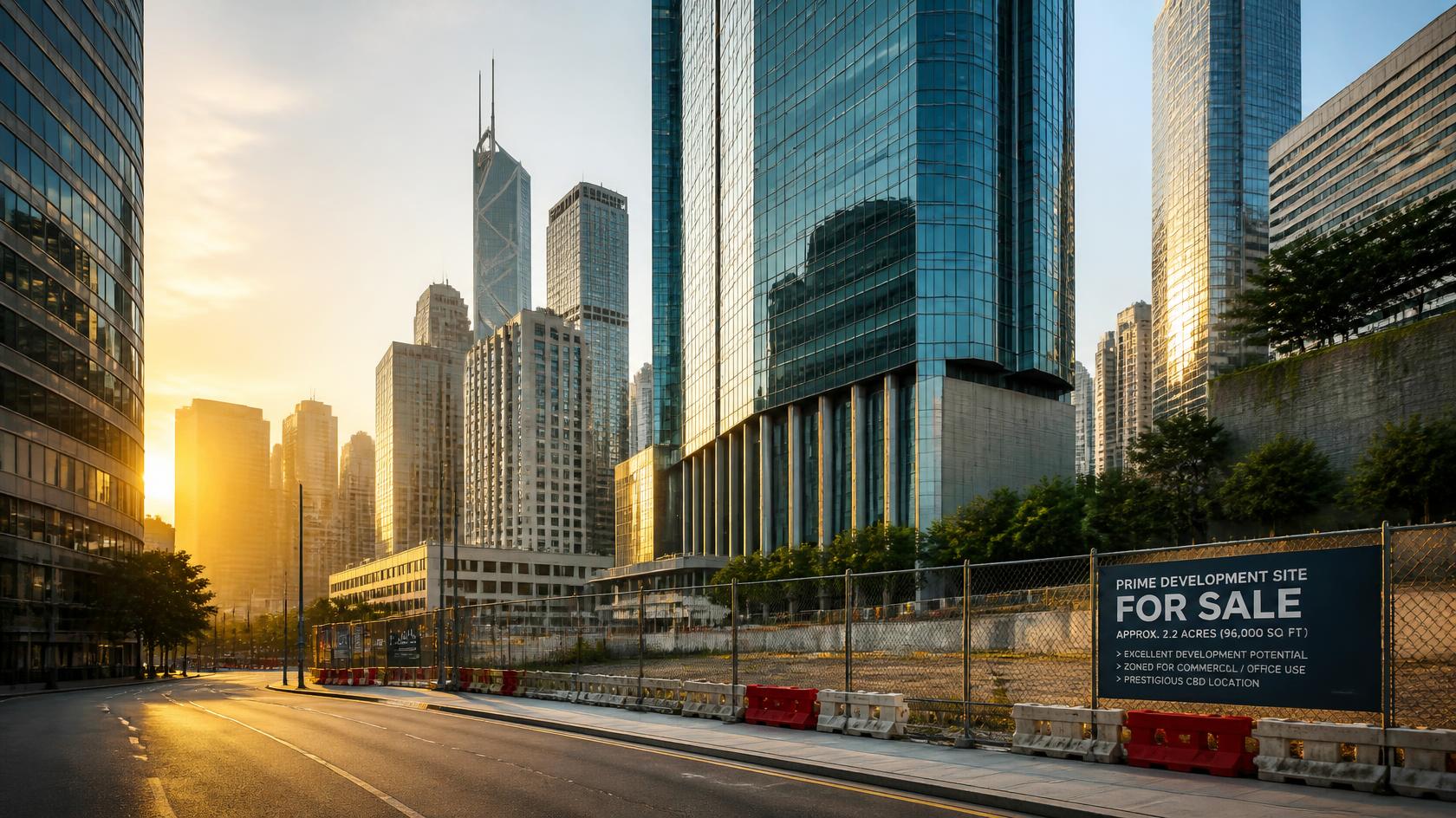
The structural dynamics governing prime commercial real estate investment across the Asia-Pacific region are undergoing a profound cyclical realignment. As traditional real estate investment trusts (REITs), institutional commercial banks, and highly leveraged public property developers pull back due to elevated refinancing costs and strict debt-to-equity compliance boundaries, private wealth capital is aggressively stepping into the void. Well-capitalised multi-family offices, high-net-worth wealth managers, and private land banking syndicates are increasingly weaponising their deep cash positions. They are executing rapid, opportunistic acquisitions of distressed urban real estate plots and non-core commercial assets across locations in Hong Kong, Singapore, and Sydney.
This structural capital rotation occurs as public commercial property valuations continue to face rolling downward adjustments driven by changing post-pandemic occupancy trends and high interest rates. According to transaction tracking data monitored by InvestIQ Asia, institutional asset velocity from public real estate entities into raw urban core redevelopment projects has slowed by an unprecedented 41% over the past year. Conversely, the deployment of completely un-leveraged private family liquidity targeting prime city center assets has broken historical records. For agile family offices, which operate outside the restrictive redemption timelines of public equity markets, this cyclical market reset represents a rare generational window. It allows private land banks to acquire trophy urban real estate assets at substantial discounts, securing long-term capital preservation anchors that are natively insulated from public market volatility.
The financial engineering driving these private land banking strategies relies on a direct, all-cash transaction structure designed to bypass the friction of traditional commercial credit approval networks. Because high-net-worth family office syndicates hold massive cash allocations on their balance sheets, they can execute full asset acquisitions within compressed 14-day timelines, a speed that debt-dependent public buyers cannot match. These distressed assets are typically acquired through private judicial liquidations, bank-directed receivership sales, or direct bilateral workouts with stressed developers seeking to quickly raise cash to shore up their corporate balance sheets.
To maximize operational efficiency and insulate family holdings from development risks, these transactions are organized using modular Special Purpose Vehicles (SPVs) integrated with local trust frameworks. When a family office land bank liquidates a distressed commercial site, the underlying real estate asset is wrapped inside an independent holding structure. This layout completely detaches the property asset from the financial histories of the previous owners. Instead of moving forward with immediate, expensive high-rise construction projects during an era of high raw material costs, these private land banks often choose a low-cost, patient land-banking approach. They hold the prime land parcels securely on their balance sheets, generating short-term cash flow via low-overhead commercial parking structures or creative retail concepts while waiting for the global macroeconomic landscape to reset and borrowing costs to stabilize.
The systematic deployment of private family office capital into distressed commercial land banks sets a clear operational benchmark that will structurally alter the long-term ownership patterns of prime urban real estate across APAC. As public real estate developers continue to struggle under legacy debt facilities and public REIT margins remain squeezed by structural shifts, private wealth structures are steadily consolidating their ownership of the region’s core urban infrastructure. The traditional approach of relying on high bank leverage to build out property portfolios has ended; long-term real estate dominance now requires holding un-leveraged, liquid cash reserves and maintaining ultimate operational patience.
Over a forward-looking 24-month horizon, InvestIQ Asia projects an intense consolidation of urban real estate ownership into private hands. Ultra-high-net-worth family networks from mainland China, Southeast Asia, and the Middle East will continue to route capital into the Hong Kong and Singapore wealth corridors, utilizing specialized trust structures to accumulate under-valued commercial property assets. The family offices and private land banks that thrive in this environment will be those that maintain strict discipline, avoiding secondary markets and focusing exclusively on irreplaceable core urban assets. This trend ensures that the strategic liquidation of distressed commercial parcels by private land banks will serve as a primary wealth preservation anchor across Asia-Pacific for the next generation.