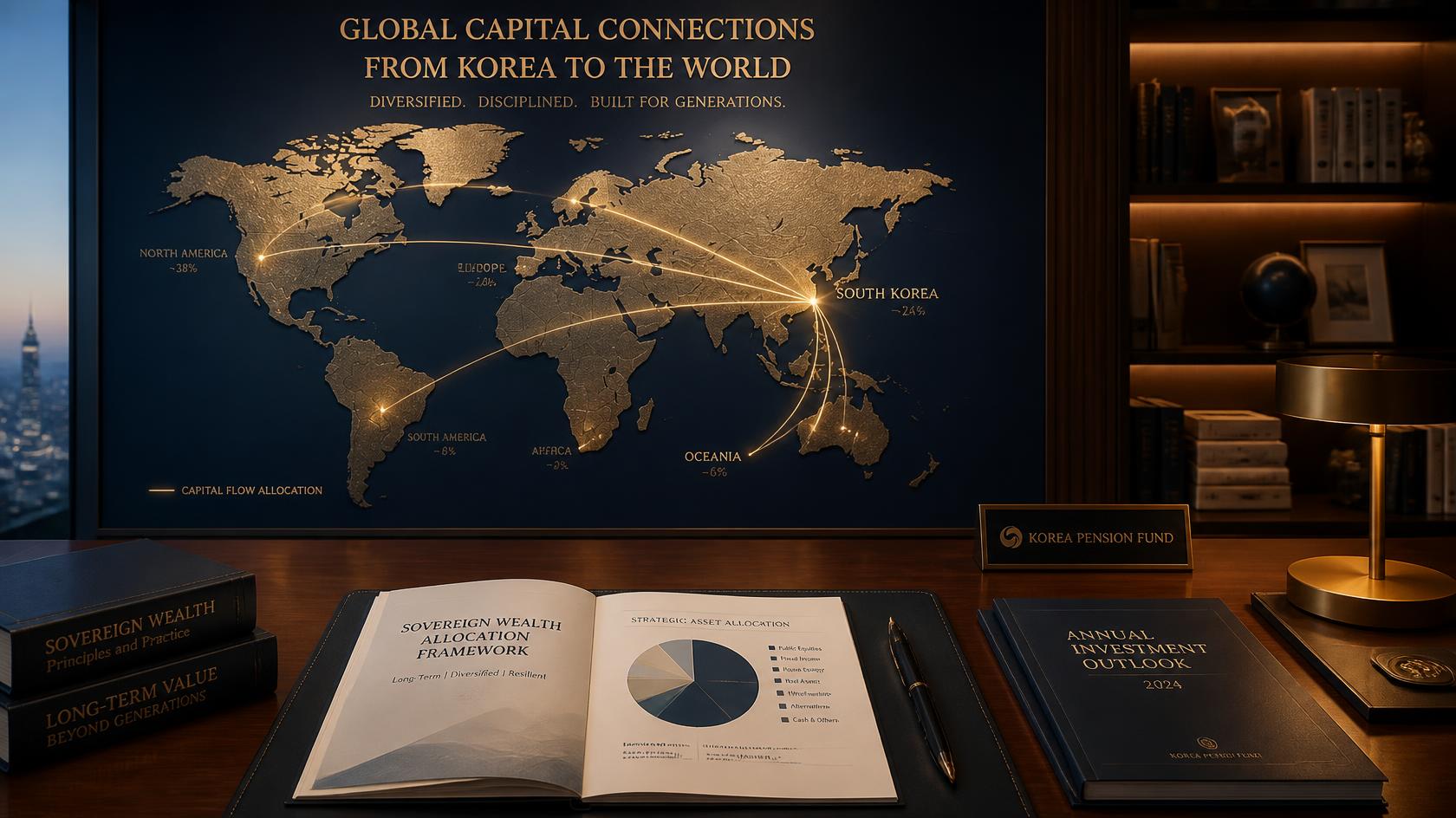
Sovereign asset allocation across North Asia is undergoing a structural reset. Facing a lack of momentum in domestic public equities and a rapidly aging national population, the National Pension Service of South Korea (NPS) is executing a major global diversification program. Under Chief Investment Officer Seo Won-joo, the world’s third-largest public pension fund is working to expand its alternative investment footprint to 15% of its massive ₩1,100 trillion portfolio. This mandate is forcing the Jeonju-based investment desk to look past local liquidity channels and establish advanced cross-border routes into offshore secondary buyouts and senior secured debt.
The primary driver here is a clear institutional disillusionment with over-hyped tech valuations and late-stage venture capital. NPS strategists point out that while early-stage tech investments historically drove outsized returns, the current macroeconomic environment is bogged down by prolonged valuation stalls and jammed corporate exit pipelines. To protect its balance sheet from index volatility, the fund has aggressively tightened its underwriting standards for venture capital allocations. In its place, the state investor is channeling large liquidity blocks into global private credit tranches, which offer predictable cash layouts and structural downside protection.
This international capital migration is reshaping fixed-income dynamics across the wider Asia-Pacific trade corridors. To manage the duration-matching complexities of its multi-billion-won liabilities, the NPS is deploying sophisticated currency derivative frameworks to smooth out global interest rate differentials. This defensive playbook serves as an influential blueprint for other North Asian state investors, including the Korea Investment Corporation (KIC) and local military pension funds, which are running parallel portfolio reviews to insulate their asset bases. As these major institutions internationalize their capital footprints, the premium on specialized cross-asset research has hit historic highs, pushing gatekeepers to abandon traditional local benchmark-tracking models.
The fund’s alternative investment committee is also using its sheer scale to squeeze fee structures among external offshore managers. Seeking to optimize long-term capital efficiency, the Jeonju desk is demanding customized side-letter agreements that cut standard management and performance fee hurdles. Global private equity and credit houses looking for an NPS allocation must now offer co-investment rights and transparent look-through reporting. While this hardline bargaining compresses operational margins for international investment managers, it secures the pension fund's capital baseline and sets a clear precedent for smaller regional peers.
Concurrently, the domestic funding ecosystem in Seoul is feeling the pinch of this global transition. Local private equity houses and early-stage funds that historically relied on the NPS as an anchor investor are struggling to meet fundraising targets, triggering a wave of consolidation across the domestic boutique financial sector. To survive, local managers are looking outward, attempting to raise capital from Middle Eastern sovereign funds and wealth hubs across the Singapore and Hong Kong corridors. This capital displacement demonstrates how the structural internationalisation of South Korean wealth is rewriting both local and cross-border corporate underwriting pipelines.